Compounding Design in Experiential Production: How Craft Decisions Stack Into Remembered Experiences
Craft decisions compound in experiential production. Six named categories decide whether guests remember an event or merely attended one.
TL;DR — Experiential programs don't fail because of one bad moment; they fail because craft decisions were never designed to compound. The Last Five Percent framework names six discrete categories, arrival sequencing, easing curves, wayfinding micro-copy, tactile quality, ambient calibration, and the deliberate pause, that each control a specific downstream effect on memory. Protect all six on purpose, and a program pays out; skip them, and the same budget dissolves into something merely attended.
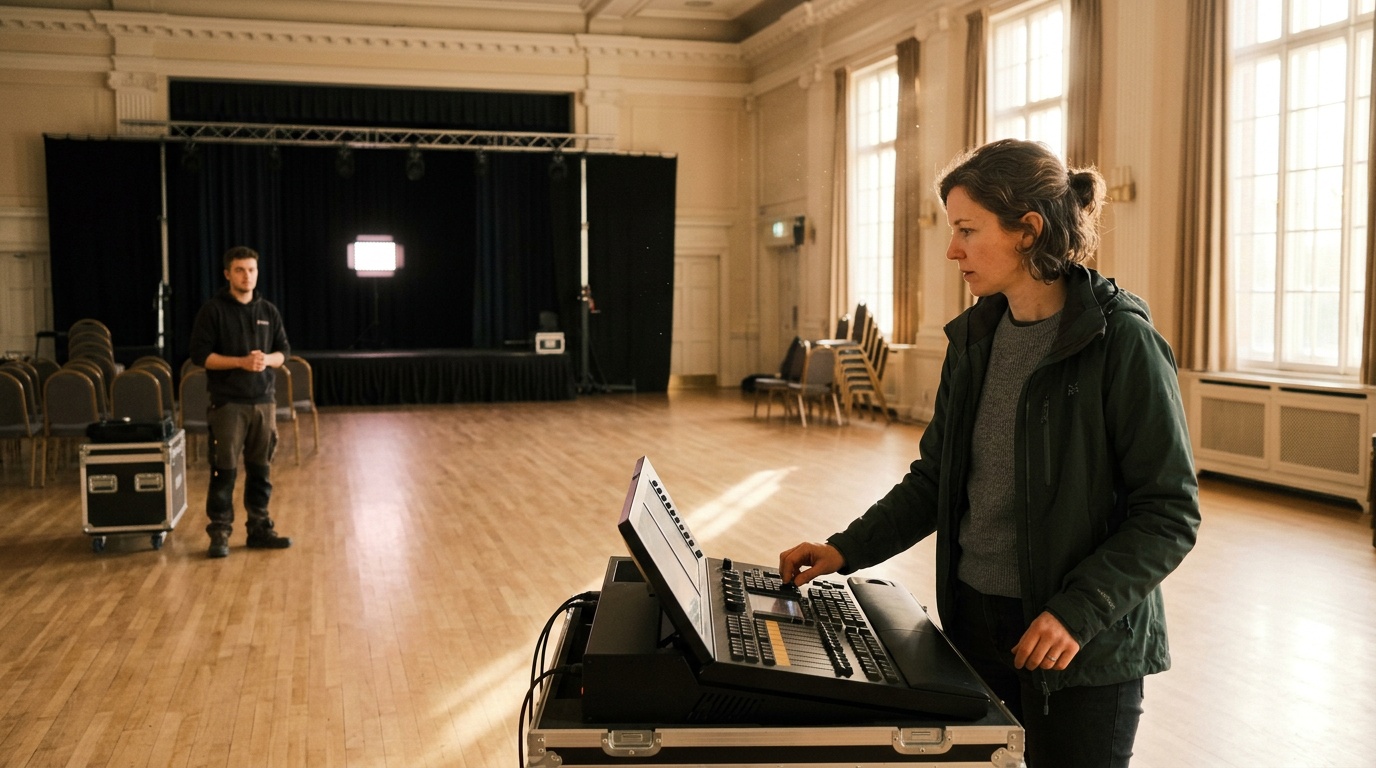
I have stood in the back of a ballroom during the final rehearsal walk-through of a launch, watching a producer add ninety seconds to a transition sequence nobody outside the room would ever consciously notice. The client asked why. I told her the truth: because the difference between a good launch and a remembered one is never in the parts of the brief anyone argues about in the planning phase. It's in the ninety seconds nobody budgeted for. Fifteen-plus years managing high-stakes programs for enterprise technology and SaaS clients has taught me that the craft decisions everyone treats as separate line items are never separate at all. They stack. And whether they stack toward something a guest remembers or something a guest merely tolerated is decided long before show day.
The Gap Between Budget and Felt Experience
Every marketing leader I've worked with has felt this gap without being able to name it: the launch had the budget of a flagship program and the felt experience of a well-executed trade show booth. That gap between budget and felt experience is not a mystery. It is a structural problem, and it has a name.
The name is compounding design. Compounding design is the sequential accumulation of discrete craft decisions across a program, where each decision controls a specific, measurable outcome in how the experience is received. It works by treating perception and memory as downstream effects of upstream choices, not as a mood you either achieve or don't. A guest's cognitive load at registration doesn't reset when they reach the keynote. It rides with them.
Most operators miss this because the consequences are deferred. A rushed easing curve on a stage reveal doesn't cost anything in the moment. It costs something three weeks later, in the exit interview, when the executive can't quite say what felt off about the day, only that it did.
Why Do Design Failures Show Up on Show Day Instead of in the Planning Deck?
Planning documents cannot simulate a human body moving through a room in real time. That's the direct answer: pacing friction, cognitive load, and decision points invisible to a slide deck become fully visible the moment a live guest walks the path, which is why failures cluster at execution, not in planning.
The seams don't show in planning documents. They show in the thirty seconds before a live demo. They show in the pause between arrival and registration, in the moment a guest has to decide where to go with nobody around to ask. Every one of those moments was designable. Almost none of them get designed, because the planning process rewards decisions that are easy to review in a deck and undervalues the ones that only reveal themselves in motion.
The Six Craft Categories That Actually Control Reception
The last five percent is not a feeling. It is a set of discrete craft categories, each of which controls something specific about how an experience is received and retained.
- Arrival sequencing and pacing. The choreography of how guests move from arrival through registration into the event environment. This controls the first impression and whether guests arrive in a state of ease or low-grade friction.
- Easing curves in motion and transition design. The timing and acceleration profile of any visual or environmental transition, a stage reveal, a screen transition, a lighting shift. Easing that feels abrupt registers as amateur. Easing that feels considered signals organizational confidence.
- Micro-copy on wayfinding and environmental signage. The language on directional signage, session labels, and printed materials. Wayfinding that assumes familiarity creates quiet friction. Wayfinding that anticipates the guest's mental model removes it.
- Tactile material quality. The weight, texture, and finish of any printed or physical item a guest touches: agendas, name badges, takeaway materials. Tactile quality encodes brand perception at a pre-cognitive level.
- Ambient calibration. Temperature, scent, and acoustic bleed between spaces. These are sensory inputs to memory formation, not comfort line items. An overheated room during a keynote creates physiological arousal that competes with the content for cognitive resources.
- The deliberate pause. The calibrated beat of silence before a speaker walks on stage, or before a reveal moment. A pause held one second short reads as rushed. A pause held to its intended length reads as confident.
Each category is a named discipline, and each one is worth protecting in a budget conversation, not because it's aesthetically pleasing, but because it is a direct input to how the experience encodes in the memory of every executive in the room.
How Small Decisions Compound Across a Program Timeline
Picture a single program timeline. A guest arrives to signage that uses internal jargon, a five-second delay before anyone acknowledges them, and a badge that feels thin in the hand. None of those three things, alone, ruins the day. Together, they spend the guest's attention before the first session even starts.
That same guest then sits through a keynote in a room running two degrees too warm, where the transition into the product reveal snaps instead of eases. By the closing reception, there's nothing left in the tank to register the moment the team spent months designing. The compounding ran in the wrong direction the entire time, and nobody in the room could point to a single failure, because there wasn't one. There were a dozen small ones, stacked.
Run the same guest through the same day with different craft decisions upstream, wayfinding that anticipates their questions, a badge with real weight, a room calibrated to hold attention instead of compete with it, and they arrive at the closing moment with attention still in reserve. That reserve is what makes a reveal land. It isn't luck. It's the compound interest on decisions made weeks before the doors opened.
If you want to find out which direction your own program is compounding, the audit is the same every time:
- Walk the guest path in person, start to finish, before the run of show is final.
- Time every transition against how it will actually feel live, not how it reads in the document.
- Read every piece of signage and printed material as a first-time guest would, not as the team that wrote it.
- Sit in every space at the hour it will actually be occupied, and check the room against the content it's meant to hold.
Skip that audit and the seams don't disappear. They just wait for show day to introduce themselves.
The Last Five Percent Is Where Compounding Pays Off
The last five percent of a launch production is a phase, not a metaphor. Fifteen-plus years running high-stakes programs, over 100 projects delivered, and portfolios north of $100M taught me the same lesson every time: the programs that got remembered were rarely the ones with the biggest budgets. They were the ones where someone made deliberate decisions at the end of the build, when the team was tired and the temptation to call it close enough was loudest.
That last layer of craft is where the compounding either pays out or quietly dissolves. The closing resolution, the last transition, the exit experience, none of these are afterthoughts. They are the crystallization point. Every design decision made earlier in the program was, in part, building toward whether these final moments had anything solid to land on.
With clarity, care, and execution discipline. That is the approach, and it starts in the strategy phase, not on show day. A program plan that treats the last five percent as a punch list rather than a phase is a program that is already gambling its compounding away.
What To Do Next
If you're staring down a flagship launch with executive visibility and a production partner who talks about spectacle before they talk about sequencing, ask a different first question. Not "what will the room look like," but "what will the room's cognitive load be at minute forty, and who is accountable for measuring it."
I take a handful of these programs each quarter, embedded directly with the team that owns the outcome, no agency layers between the person doing the craft work and the person who has to explain the result to finance. That's a deliberate constraint, not a limitation. It's the only way the last five percent gets protected instead of traded away when the budget gets tight in week eleven.
Working systems over theater. Taste that outlives the cycle. The last five percent done on purpose, not by accident, and not left to whichever vendor has the least incentive to fight for it.
Frequently asked questions
What is compounding design in experiential production?
Compounding design is the sequential accumulation of discrete craft decisions across a program, where each decision controls a specific, measurable outcome in how an experience is received. A guest's cognitive load at registration doesn't reset by the time they reach the keynote, it carries forward, which is why early craft decisions either build toward a remembered experience or quietly work against it.
Why do design failures in live events show up on show day instead of in the planning deck?
Planning documents can't simulate a human body moving through a room in real time, so pacing friction and cognitive load stay invisible until a guest actually walks the path. The seams don't show in planning documents; they show in the thirty seconds before a live demo, in the pause between arrival and registration, in a decision point nobody accounted for.
What craft categories actually control how an experience is received and remembered?
Six categories: arrival sequencing and pacing, easing curves in motion and transition design, micro-copy on wayfinding and signage, tactile material quality, ambient calibration, and the deliberate pause before a reveal. Each one controls something specific, from first impression to physiological arousal to whether a reveal moment reads as confident or rushed.
Why does the last five percent of a program matter more than its share of the budget?
The last five percent is the crystallization point where every earlier design decision either pays out or quietly dissolves. It's where deliberate choices get made when a team is tired and the temptation to call it close enough is loudest, and it's disproportionately what separates a remembered program from one that was merely well-attended.
How can a marketing leader audit whether their own event program is compounding correctly?
Walk the guest path in person before the run of show is final, time every transition as it will actually feel live, read all signage as a first-time guest would, and sit in every room at the hour it will actually be occupied. Skipping this audit doesn't remove the seams; it just delays when they show up, usually on show day itself.
What's the difference between a launch that looks complete on paper and one that actually gets remembered?
A program that looks complete on paper accounts for the visible line items, staging, content, run of show, but hasn't simulated the guest's actual path through pacing, sensory conditions, and transitions. A remembered program treats those invisible variables as engineerable craft decisions, protected deliberately in the last five percent rather than traded away under budget pressure.